
Introduction:
Fuel monitoring has become a critical requirement for modern fleet operations across many regions where fuel cost, theft, and operational inefficiency directly impact business profitability.
However, one major confusion still exists in the market:
👉 Should you rely on Fuel Level Sensors or CAN Data for fuel monitoring?
While many system integrators we have seen mostly in Saudi Arabia prefer CAN Data for convenience, businesses increasingly demand accuracy, transparency, and control.
This blog explores the real-world comparison between these two technologies, based on practical deployment and field experience.
Understanding the Two Approaches
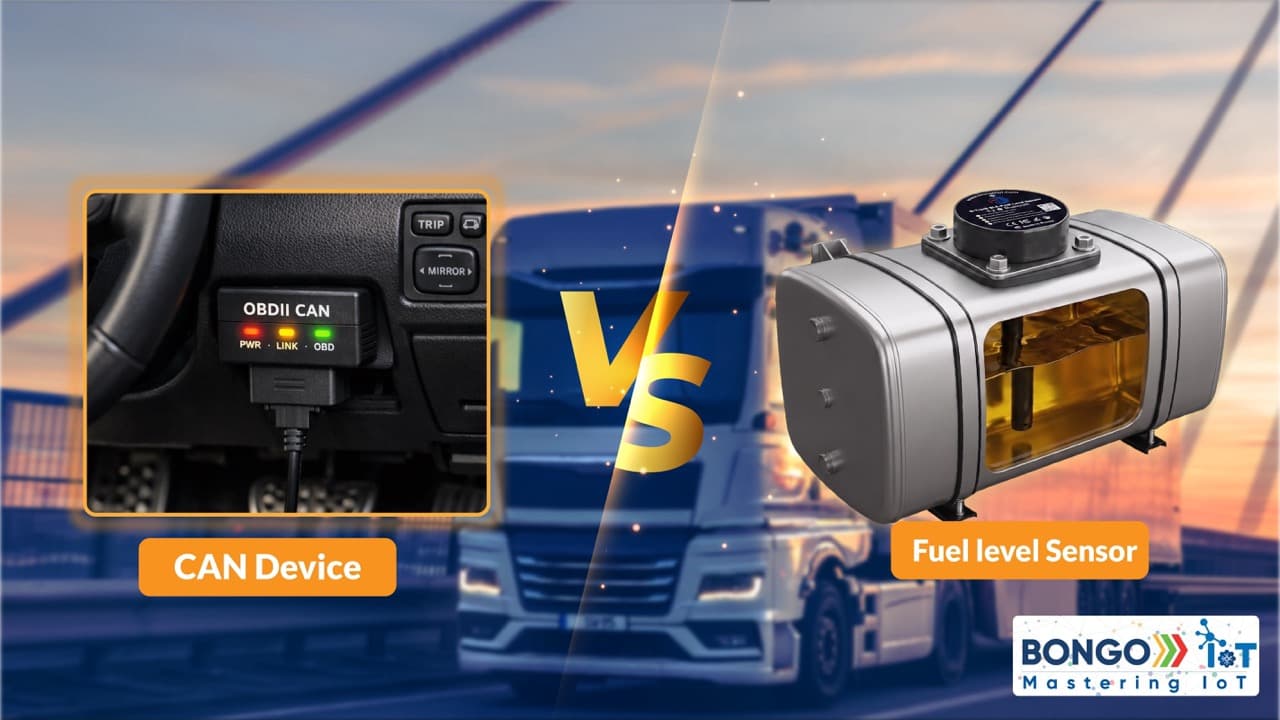
A Fuel Level Sensor measures the actual fuel volume inside the tank. It is a physical measurement, not an estimation. When properly installed and calibrated—ideally at a fuel station—it can achieve very high accuracy and provide clear visibility into refills, consumption, and drain events.
CAN Data works differently. It does not measure fuel directly. Instead, it pulls interpreted data from the vehicle’s ECU. This data is calculated based on engine behavior and manufacturer logic. It is convenient, quick to deploy, and requires no installation inside the tank.
At a surface level, CAN Data feels easier. But ease and accuracy are not the same.

Why Many Integrators Prefer CAN Data
In many Middle Eastern deployments specially in Saudi Arabia, system integrators tend to prefer CAN Data. The reason is not performance—it is operational comfort.
Fuel Level Sensors require calibration, technical precision, and sometimes physical intervention in the tank. These steps are often seen as complex or time-consuming. In some cases, company policies discourage tank modification. But in many situations, the reality is simpler: integrators avoid it because it demands more effort and expertise.
As a result, CAN Data becomes the default choice—not because it is better, but because it is easier to deliver.
Real-World Testing: Fuel Level Sensor vs CAN Data
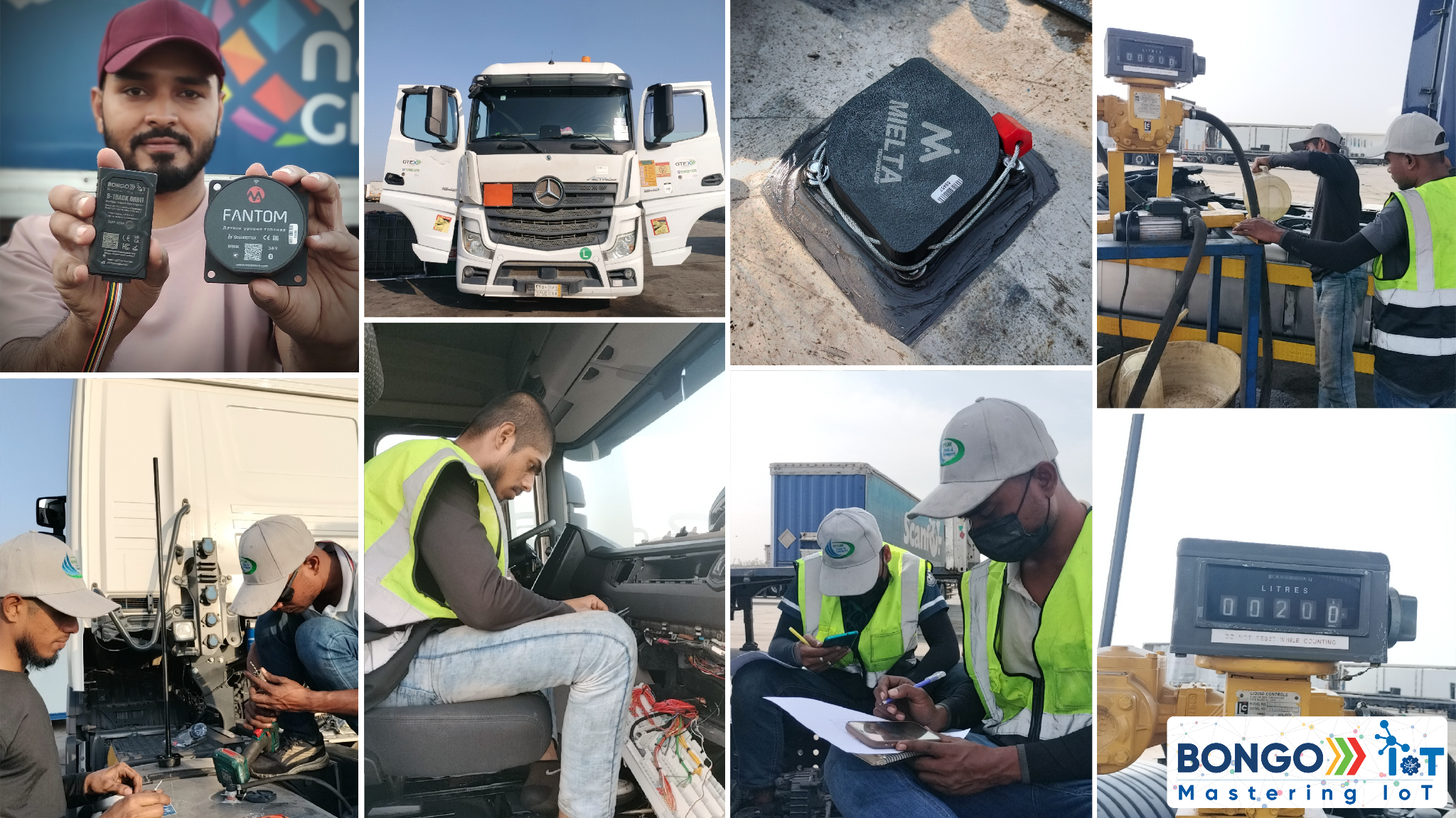
To move beyond assumptions, we implemented both systems on the same vehicles under identical operating conditions.
The objective was simple: observe which system reflects reality. What we found was not surprising—but it was important.
Test Findings:
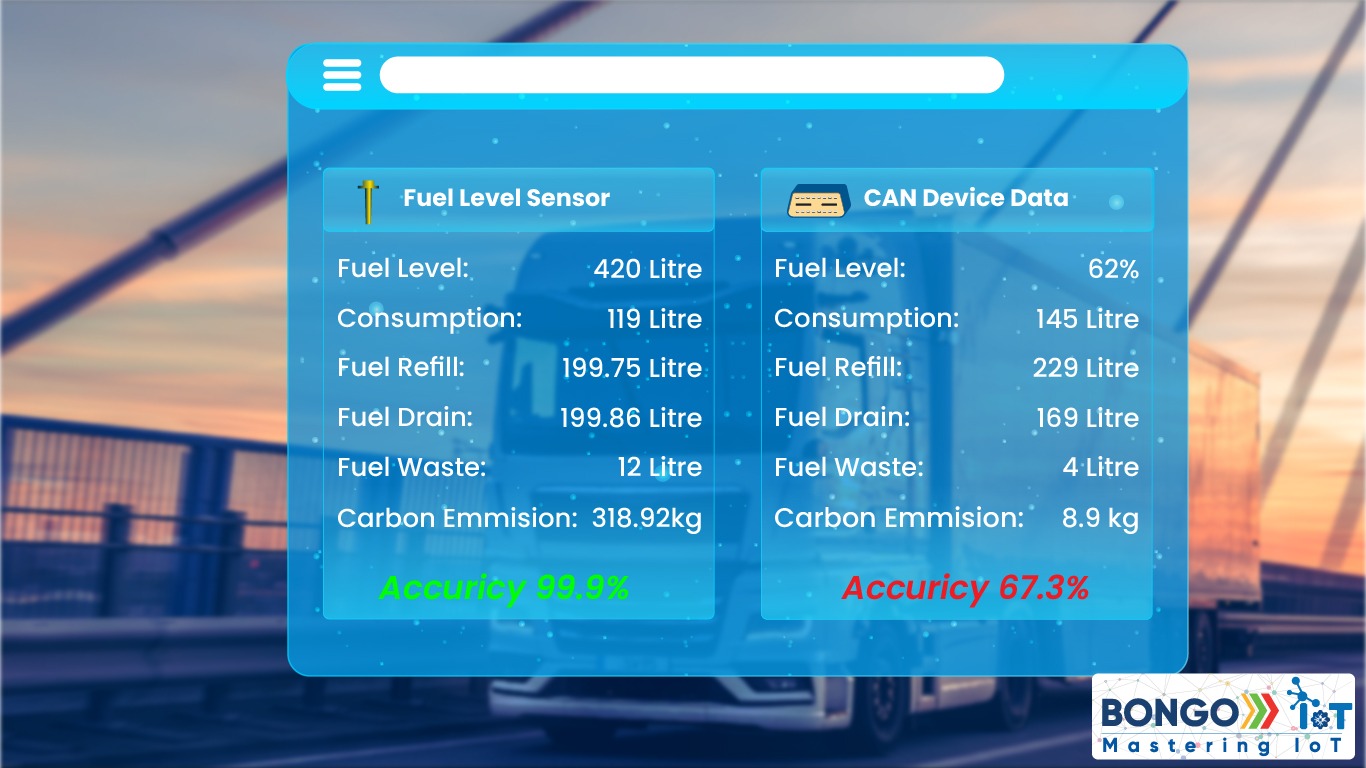
CAN data is widely used in the industry because it is easy to access and requires no additional installation. It gives a quick overview of vehicle parameters, including fuel level in percentage. However, when it comes to real fuel monitoring and operational control, CAN data has clear limitations that cannot be ignored.
- First, CAN data shows fuel level only as a percentage, which is derived from ECU estimation. It does not represent the actual fuel quantity inside the tank. For any business trying to measure fuel in terms of cost, usage, or accountability, percentage-based data does not provide the clarity needed.
- Second, the consumption data from CAN is not reliable. It is calculated based on engine behavior, not on actual fuel movement. This creates a gap between what the system reports and what is truly happening in the tank, making it difficult to trust for performance analysis or decision-making.
- More importantly, CAN data does not provide operational intelligence. It cannot:
- Detect fuel refill events
- Identify fuel drain or theft
- Highlight idle fuel wastage
- Calculate real mileage based on actual fuel usage
This means even if fuel loss or inefficiency is happening daily, the system remains unaware.
- Carbon emission insights derived from CAN data are also not dependable, as they rely on estimated fuel consumption rather than real fuel usage. This leads to misleading sustainability and efficiency reports.
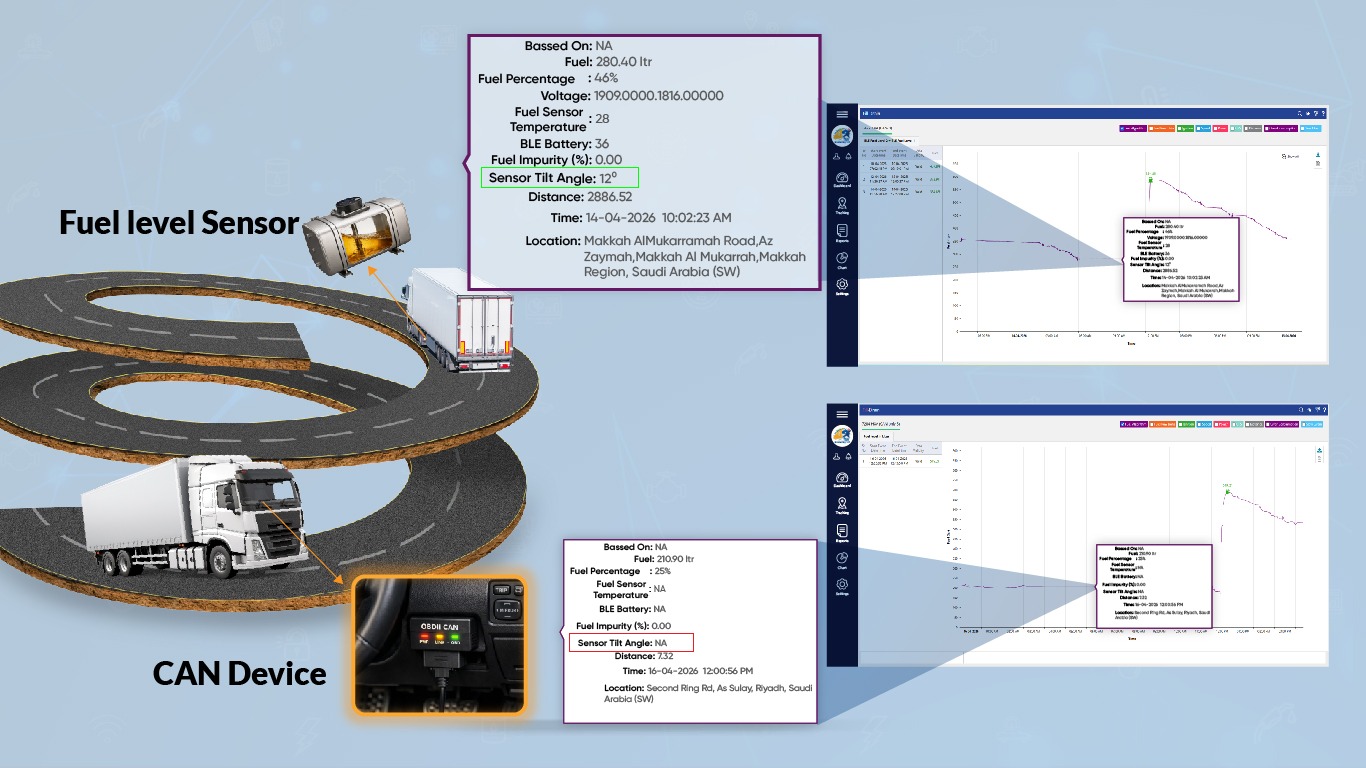
There are also technical reasons behind these limitations:
- Data mapping inconsistencies across different vehicles
- ECU limitations, as it is not designed for precise fuel measurement
- OEM restrictions on accessing detailed fuel data
- Incorrect or inconsistent PID interpretation
- Another key gap is that CAN data does not reliably capture fuel refill events, making it impossible to verify whether refueling is accurate or compromised.
Fuel Level Sensor Accuracy: Myth Eliminated
There is a common narrative that Fuel Level Sensors are unreliable. In reality, it’s not the technology — it’s the implementation.
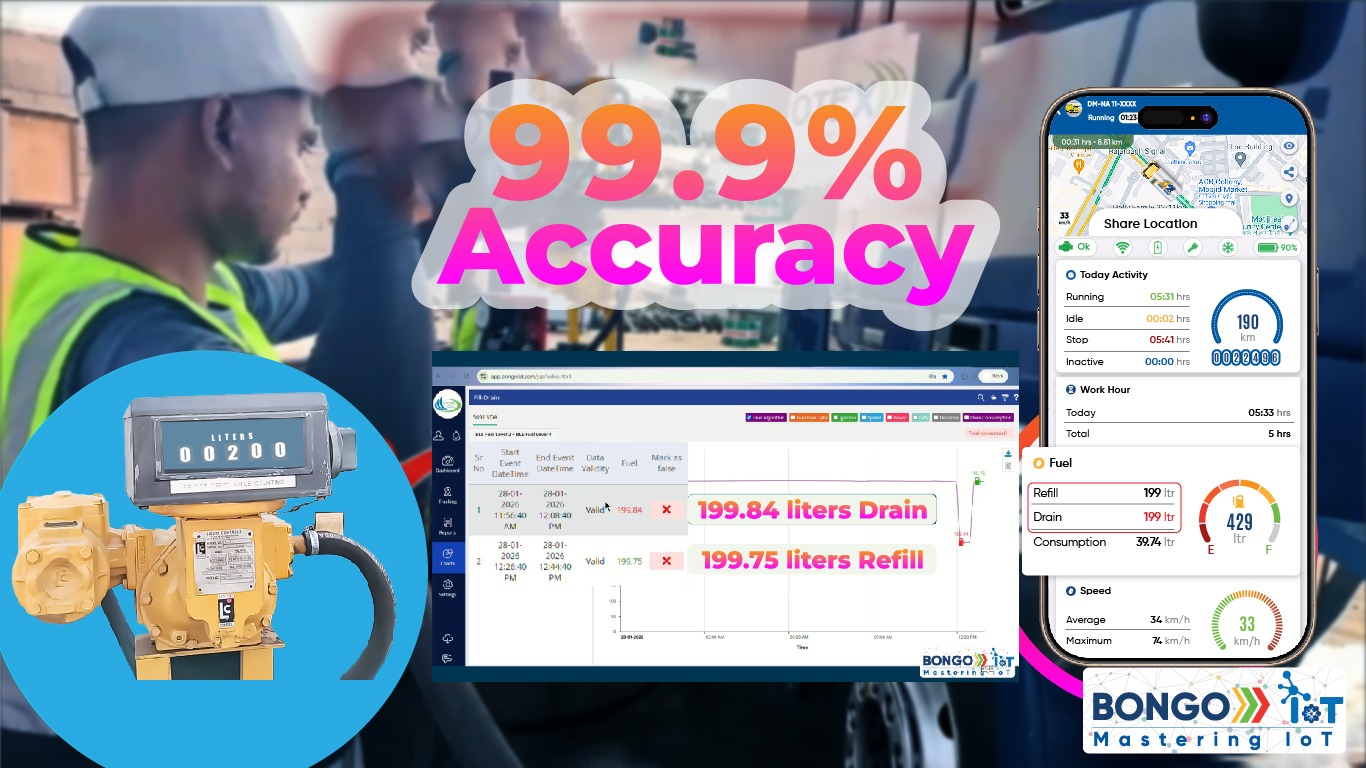
Without proper calibration and installation, accuracy drops. When done correctly, Fuel Level Sensors consistently deliver 97%–99.5% accuracy with clear visibility of refills, consumption, and even small drain events.
Poor execution creates doubt. Proper implementation delivers truth.
Where CAN Data Truly Adds Value
While CAN Data has limitations in precise fuel monitoring, it would be incorrect to dismiss its importance entirely. In fact, there are specific areas where CAN Data becomes highly valuable and even essential.
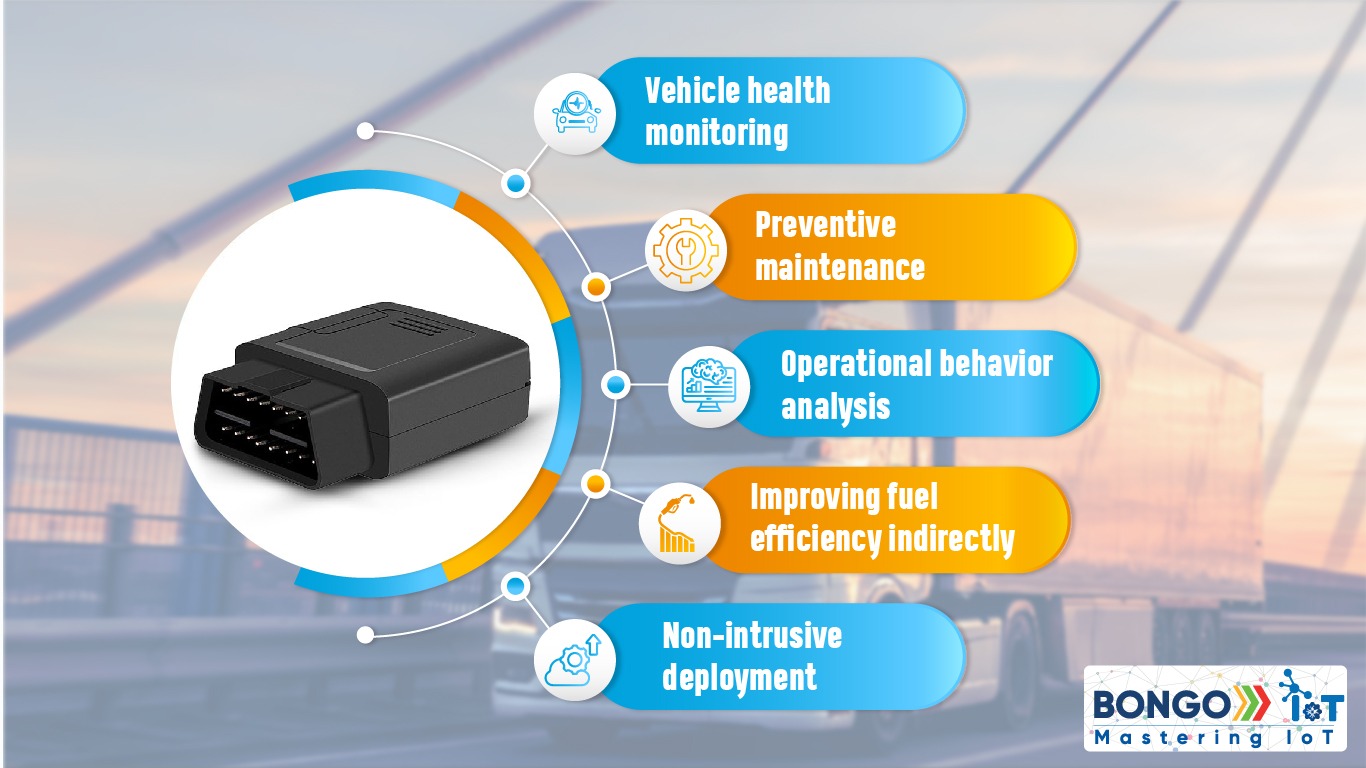
CAN Data is highly effective for:
- Vehicle health monitoring — engine load, RPM, coolant temperature, and fault codes
- Preventive maintenance — early detection of issues, reducing breakdowns and downtime
- Operational behavior analysis — identifying harsh acceleration, excessive idling, and over-revving
- Improving fuel efficiency indirectly — through better driving discipline and engine performance
- Non-intrusive deployment — no need for tank modification, suitable for compliance-restricted environments
In practice, CAN Data should not be used as a standalone fuel monitoring solution.
It works best as a supporting intelligence layer, complementing accurate fuel measurement systems and adding depth to overall fleet analysis.
How Bongo IoT Is Driving Market Awareness
At Bongo IoT, we are not just deploying solutions —we are redefining how fuel monitoring is understood. Instead of choosing the easier method, we focused on validating what actually works in real operations.
Through field deployments, cross-technology testing, and continuous R&D, we have built our fuel monitoring approach around accuracy, verification, and real-world performance.
This is not just about deploying sensors or reading data. It is about ensuring that every liter of fuel is accounted for with confidence.
Conclusion: The Decision That Defines Control
Fuel monitoring is not a feature—it is a control system.
If the data is not accurate, the system fails its purpose, no matter how easy it was to deploy.
The real decision is not between Fuel Level Sensor and CAN Data. It is between accuracy and approximation.
And in fleet operations, that difference defines everything—from cost savings to operational discipline.


